
Casino Licensing in The UK
An “economic crime levy” is payable by entities that are regulated for anti-money laundering purposes (currently only casinos in the UK) and which generate more than £10.2 million in UK revenue. It should be noted that in April 2025 HM Treasury opened a consultation (which closed on 21 July 2025) on a proposal to introduce a single remote gambling duty that would apply to all remote gambling activities targeting the UK. 15% of the commission charges charged by betting exchanges to users who are UK citizens Operating licences are generally indefinite, subject to paying annual fees.
The list of responsibilities of the Gambling Commission includes work to ensure that licencees act in accordance with the requirements imposed by the Gambling Act 2005 and other related regulations and standards. Previously, an operator in one of the whitelisted gambling jurisdictions could advertise their services in Great Britain without requiring a separate licence from the Commission. Whilst, those operators who wish to advertise their services in England, Wales, or Scotland, but are based outside the country, have to obtain a licence from the Gambling Commission following the passage of the Gambling (Licensing and Advertising) Act 2014. The Gambling Commission is an executive, non-departmental public body of the Government of the United Kingdom responsible for regulating gambling and supervising gaming law in Great Britain. All of the legal UK casino sites we recommend hold a valid UKGC licence and meet these requirements.
If a gambling company fails to comply with the regulations, it can face substantial fines from the Gambling Commission. Applicants are eligible to apply for the premises license only after applying or receiving an operating license. Ancillary licenses apply to operators that provide telephone and email betting.
In addition, the gaming machine to gaming table ratio for Small 2005 Act casino premises is amended by The Casinos (Gaming Machines and Mandatory Conditions) Regulations 2025 (opens in new tab). Paragraph 7.9 – The Gambling Act 2005 (Commencement No. 6 and Transitional Provisions) (Amendment) Order 2025 (opens in new tab) amends the gaming machine entitlements for converted casino premises. The following paragraphs of the GLA have been affected by legislative changes that came into effect on 22 July 2025 concerning the entitlements for casino premises licences. The licensing authority’s gambling statement may also identify interested parties from whom the licensing authority will accept representations in respect of an application related to a premises licence.
Since April 2020, the UKGC has banned the use of credit cards for online gambling. Every casino in this list holds a current UKGC licence. Most UKGC-licensed casinos support a non gamestop casinos broad range of payment methods. These tips apply whether you are new to online casino play or have been doing it for years. Getting the most from your online casino experience is as much about good habits and informed choices as it is about luck.
(3) Subject to sub-paragraph (4), in determining the floor area of the table gaming area, any number of separate areas within the premises may be taken into account. (2) The premises must contain a table gaming area, the floor area of which is no less than the lesser of— “(1) This paragraph applies to larger converted casino premises.”, and
What does the Gambling Act 2005 cover?
For 1968 Act casinos that access the new machine entitlements, we propose that the mandatory licence conditions remain aligned, so that only areas that comprise 12.5% of the minimum required table gaming area can be taken into account in determining the table gaming area. We will also amend the current inconsistency in the regulations which requires Small 2005 Act casinos to have a table gaming area of at least 500sqm (identical to their minimum overall gambling area) by reducing this requirement to 250sqm. This restriction, alongside requirements for non-gambling area, will only apply to those 1968 Act casinos that decide to exercise the enhanced gaming machine entitlement. Only casinos that have a gambling area of 280sqm or more will be eligible to access the enhanced gaming machine entitlement. As gaming machine allowances and machine to table ratios for 1968 Act casinos and Small 2005 Act casinos converge, more consistent size requirements should apply across the two types of licence to ensure a degree of fairness and consistency.
We are also proposing that this minimum transaction time applies to all machines. The vast majority of respondents agreed that there should be a minimum transaction time for customers making a cashless transaction on a gaming machine. Category D machines do not have a committed payment limit. The committed payment limits are £10 for Category B1, B2, B3 and B3A machines, and £5 for Category B4 and C machines. The deposit limits are currently set at £20 for Category B and C machines, and £2 for Category D machines. This could include looking at how customers interact with machines that accept cashless payments, how much they spend and the impact of different protections.
Fee Increases (
This may include increasing staff numbers, with one licensing authority stating that it would consider dedicating one full-time resource to the enforcement of licensed premises. The majority of licensing authorities advocated for the maximum proposed premises fee increase of 30%. Following analysis, we propose to increase the maximum premises fees chargeable by licensing authorities by 15%.
In 2019, members of the Bacta trade association decided to take voluntary action to ban under-16s from playing ‘cash-out’ slot-style machines while unaccompanied by an adult on their premises. Currently, Category D machines have no age restrictions nor area restrictions in licensed/permitted premises. Whilst there are some forms of indirect cashless payment methods under the current framework, as well as ATMs near some gambling locations, the lack of future-proofing for payment methods does risk a real decline in gaming machine GGY. This will include assessing the role of session limits across Category B and C machines alongside safer gambling tools.
This includes online gambling and high street casinos, as well as game developers and casino software makers. It is important to differentiate between unlicensed offshore casinos and international casino sites which have multiple licences. Notifications relating to premises licence must be sent, by email, to A premises licences is a licence, issued by a local licencing authority, that authorises gambling to take place in that premises.
The primary cost of this measure is the additional costs incurred by gambling operators resulting from the increased licensing fees. The primary and intended benefit of this measure is to increase funding for licensing authorities to carry out administrative and enforcement duties in relation to land-based gambling premises in their remit. Scottish Ministers also have power to set application and annual fees for premises licences, which differ from the fees set out for England and Wales, and are set out in the Gambling (Premises Licence Fees) (Scotland) Regulations 2007. This activity may include inspecting gambling premises to ensure that they are complying with their licence or dealing with complaints from residents or neighbours.
Gambling Act 2005
The UK market is tightly regulated, but unlicensed and rogue operators do exist — particularly sites that target UK players without holding a valid UKGC licence. The casino arm is a solid complement to its sports betting product, offering a well-stocked slots section and a live casino lobby with popular table game variants. TalkSPORT BET Casino carries the credibility of the UK’s most listened-to sports radio station into the online gambling space. The integration between casino and sports betting is seamless, making it a strong all-rounder for players who enjoy both. The mobile app is polished and responsive, making it easy to switch between sports betting and casino play.
This response provides non-remote gambling operators with clear notice of our intention to introduce the measures set out within this government response. You’ll also find lots of responsible gambling tools and support options, which are often inadequate at offshore casinos. Due to its strict regulations, operators need to acquire different types of licences for different types of products they offer. Let’s find out more about online casino banking, gambling regulations, and responsible gambling in the UK. As a result of such regulations, UK casinos are popular for providing safe environments for all players online.
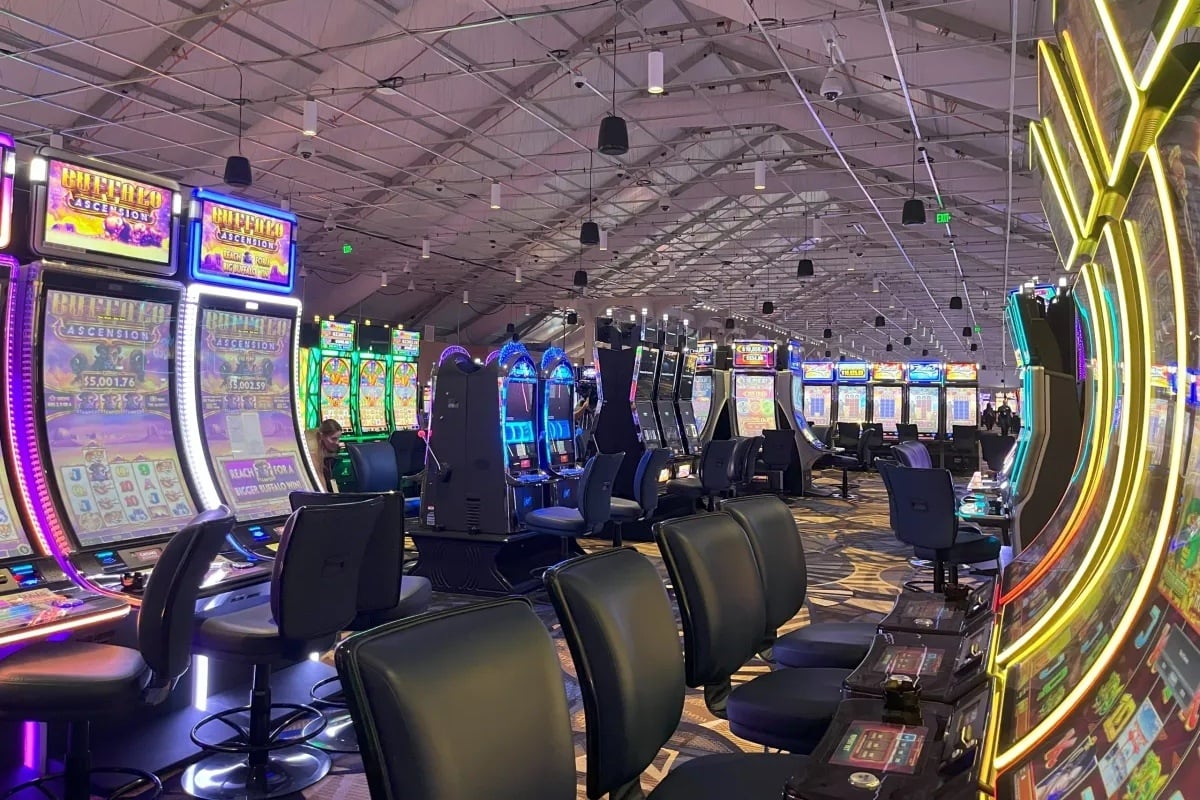
Player protections can be used to mitigate increases in the risk of gambling harm. Therefore, the risk of increased gambling harm is assumed to be higher for Options 1 and 3 than Option 2. This increase is expected to be higher under Option 1 than Option 2, as operators will not be restricted by device constraints. Data on net expenditure per session shows that from April to September 2019, the vast majority of sessions across all machine categories ended in the player either winning money or losing up to £20.
(b)the converted casino premises licence is not varied under section 187 of the 2005 Act(4) so as to relate to premises to which it did not relate on that date. (3) Sub-paragraph (2) does not apply to premises in which the floor area of the gambling area of the casino was 1,500m² or greater on 12th May 2025 provided that, after that date— (5) No gambling is permitted in the table gaming area of the premises other than gambling by way of table gaming.
The stated aims of the Commission are to keep crime out of gambling, Ensure it is conducted in a fair and open manner and to protect the vulnerable. Moving into the iGaming industry was a natural progression for Heath, initially focusing on sports betting content for major brands. In the most serious cases, a licence can be suspended or revoked.
Operating licences are the primary authorisation required to provide gambling facilities in Great Britain. Apply to the Gambling Commission for a personal gambling licence or a gambling operating licence if you run or manage a gambling business. Guidance and information for complying with licence conditions and regulations for running a gambling business. Information and guidance about the licences we provide and the fees relating to gambling activities. You can apply online for a licence from us to provide casino activities. You will need to apply to the licensing authority the premises is located, to get a premises licence.
Increased fees will enable licensing authorities to undertake more enforcement and engagement activities with licensed premises. Premises licence fees in Scotland are set under different regulations and are therefore a matter of consideration for the Scottish Government. We believe that on balance an increase to the maximum cap on premises licence fees by 15% is proportionate. A low number of premises visits may also be indicative of the lack of funding received by licensing authorities to fully undertake duties, such as inspections, alongside other administrative and enforcement functions. However, premises visits are only one aspect of a licensing authorities regulatory work. A number of these responses acknowledged the financial pressures placed on licensing authorities, which was reflected by the substantial number of industry responses that advocated for a 10% increase.
- The licence holder will not be required to apply for a variation of their premises licence.
- We intend on keeping the same requirements for calculating non-gambling areas for both 2005 Act and 1968 Act casinos.
- The majority of industry responses expressed a preference for either Option 1 or Option 3, and were strongly opposed to Option 2.
- Live dealer games are famous for giving you the authentic feeling of gambling at a real casino.
Free-to-play casino games with prizes are regulated as gaming and require a licence. The outcome of the Commission’s consultation on changes to financial key event reporting – which closed in March 2024 – is pending.Finally, in June 2025 the UK Government announced that it plans to introduce a “Voluntary Code” for prize draw operators whose offerings do not require a licence under the gambling framework because of the presence of a free entry route. In contrast with some jurisdictions, only casinos form part of the “regulated sector” for AML purposes, though all operators are required to conduct detailed risk assessments and implement AML policies, procedures and controls. Since 1 May 2025, operators have only been allowed to directly market to customers that have consented to marketing on a granular per product (i.e., casino, bingo, betting) and per channel (i.e., SMS, email) basis and, in January 2026, further rules will take effect on the offer of incentives.
New or inexperienced individuals who are not familiar with the casino industry or the law would struggle considerably to obtain these licences without proper guidance and independent legal advice. The cost of seeking the correct licences for the first time can be very high and there are ongoing fees to be paid once a gambling licence is in place. The licensing of casinos is perhaps the most complex aspect of licensing law in the UK due to the rarity of application and unique legal and technical know-how that is required. However, licences can be suspended or revoked where material is brought to the attention of the Gambling Commission or the licensing authority. Once either an operating or premises licence is in force, there is an annual fee to pay.
When granting applications to vary a premises licence, the licensing authority is reminded to ensure that all the appropriate licences and notices are issued with any updated information in respect of changes made by the Regulations, for example in relation to mandatory and default conditions. This would require a premises licence variation application to the relevant licensing authority given the changes to the gambling and non-gambling areas. For non-remote betting facilities, this would be a non-remote general betting (standard) operating licence. This guidance provides information on the overall intent of the statutory instruments, what the changes mean for operators of casino premises that intend to make use of the regulatory changes and how this process should be administered by licensing authorities when applications are received. Other converted casino premises where the gambling area is less than 280m² will be limited to a maximum of 16 separate betting positions. It cannot be enforced against non-extended casinos, but when calculating the number of machines against the maximum of 80, all machines in every connected converted casino will be counted, whether or not they have decided to exercise the extended entitlement.
Should the operating and premises licence fees that apply to 2005 Act casinos also apply to 1968 Act casinos that increase their gaming machine entitlements? Operating and premises licence fees for 1968 Act casinos that increase their gaming machine entitlement should match the operating and premises licence fees charged for 2005 Act casinos. Do you agree with the proposal that casino operators will be required to notify licensing authorities and the Gambling Commission if they decide to take-up their entitlement to additional gaming machines under the new regime?
Making it an offence for a person to invite, cause or permit a child or young person to use these machines should act as a further incentive to abide by the rules. The current industry voluntary code allows these machines to remain alongside all other types of Category D machines. Moving them to an age restricted area would disproportionately impact small businesses who are reliant on streams of income from all of their different types of machines. In addition, as the maximum stake on these machines is 10p, these machines are less likely to be played in an area where there are Category C machines which have a maximum stake of £1 and can often be played at different staking levels up to this maximum. The industry has said that they are primarily used by family members who are 18 or over, while children play machines like crane grabs and coin pushers in the same area. They do not have any age restricted areas as they have no adult-only machines.
From 6 April 2025, a new mandatory statutory levy replaced the previous voluntary system of contributions to research, education, and treatment (RET) of gambling harms. Subsequent annual fees are due on each anniversary of the licence issue date. The first annual fee is due 30 days after the licence is issued and is reduced by 25%. In 2024–25, 3,491 personal licence applications were submitted, with 95% processed within eight weeks. Personal licence applications require identity documentation, address history, employment history, a police report, a credit report, and (in some circumstances) a statement of assets and liabilities.